What's the best way to water my trees in Pasadena's dry climate?
This is probably the most common question I get, and for good reason. We live in a pretty dry place, even with our occasional rains. The biggest mistake I see folks make is frequent, shallow watering. That just encourages surface roots, which aren't going to help your tree much when things get really dry or windy. What you want to do is water deeply and less often. Think about getting water down to at least 18-24 inches, especially for mature trees. How do you know if you're doing that? You can use a soil probe or even a long screwdriver; if it goes in easily, the soil's wet. If it stops, you need more water.
For young trees, you might need to water a couple of times a week during the hottest months. Mature trees, once established, can often go longer, maybe every 2-4 weeks, depending on the species and the heat. A slow drip from a hose or a soaker hose for several hours is usually better than a quick blast from a sprinkler. And remember, the soil around here, especially in areas like the Arroyo Seco, can be pretty sandy or rocky in spots, so it might drain faster than you think. Adjust your watering based on what you see your tree doing, not just a calendar.
How can I tell if my tree is sick or just stressed?
It's tricky, right? Sometimes a tree just looks a little off, and you're not sure if it's a big deal or not. A lot of the time, what looks like sickness is actually stress. Stress can come from a bunch of things: not enough water, too much water, compacted soil, construction damage, or even sudden temperature changes. Signs of stress often include leaves turning yellow or brown and dropping prematurely, smaller than normal leaves, or branches dying back from the tips.
Actual diseases usually have more specific symptoms. You might see unusual spots on leaves, cankers (sunken, discolored areas) on branches or the trunk, powdery mildew, or strange growths. Pests also leave their own calling cards – holes in leaves, sticky residue (honeydew) from aphids, or sawdust from borers. The key is to pay attention. Walk around your tree regularly, look at the leaves, the bark, the branches. If you see something new or worsening, that's when you should probably give us a call at Pasadena Tree Service. We can usually tell pretty quickly what's going on.
When is the best time to prune my trees?
Generally speaking, the dormant season – late fall to early spring – is the best time for most heavy pruning. Why? Because the tree isn't actively growing, so it's less stressed by the cuts, and you can see the branch structure clearly without all the leaves getting in the way. Plus, it minimizes the risk of disease transmission and pest infestation that can happen when you prune during active growth periods.
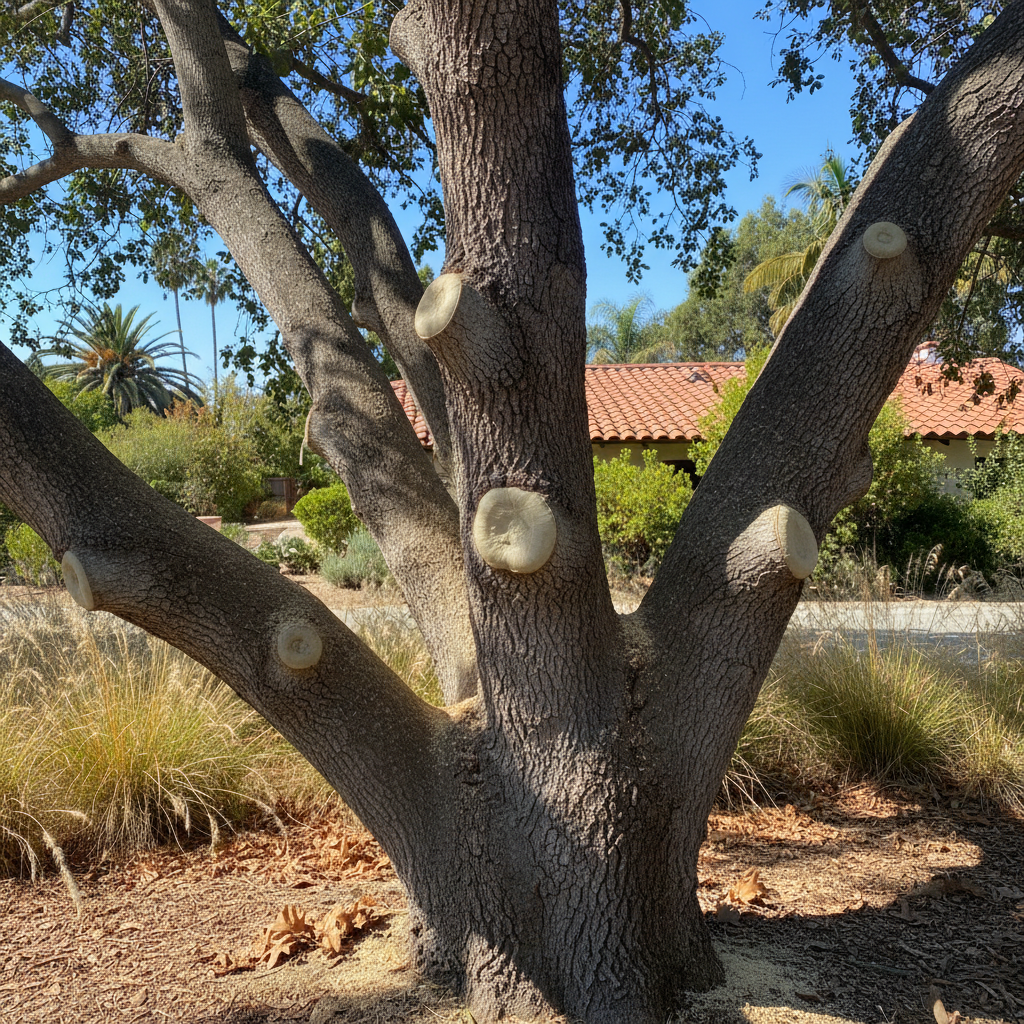
However, there are exceptions. If you have dead, diseased, or hazardous branches, those should be removed immediately, no matter the season. Some flowering trees, like jacarandas (which we see all over Pasadena), are best pruned right after they finish blooming so you don't cut off the next season's flowers. Fruit trees also have their own specific pruning schedules. It really depends on the species and what you're trying to achieve with the pruning – whether it's for health, safety, or aesthetics. If you're not sure, it's always better to consult with a pro before you start hacking away.
Do I need to fertilize my trees? If so, with what and how often?
A lot of homeowners think they need to fertilize their trees every year, but that's not always the case. Healthy, established trees often get all the nutrients they need from the soil, especially if you're mulching around the base. Over-fertilizing can actually do more harm than good, leading to excessive growth that's weak, or even burning the roots.
You should consider fertilizing if your tree is showing signs of nutrient deficiency – like pale or yellowing leaves, slow growth, or smaller-than-normal foliage – and you've ruled out other issues like watering problems or pests. A soil test is the best way to figure out exactly what nutrients your soil is lacking. You can get these done pretty cheaply through local nurseries or university extension offices. Based on the soil test results, we can recommend a specific fertilizer blend. If you do fertilize, it's usually best to do it in late fall or early spring when the tree is preparing for or just starting new growth. Slow-release granular fertilizers or deep-root feeding are usually the most effective methods.
My tree's roots are lifting my sidewalk/driveway. What can I do?
Ah, the classic Pasadena problem, especially with some of our older, larger trees planted too close to infrastructure. Tree roots are powerful, and they'll go where the water and oxygen are, which often means under concrete. Removing the tree is one option, but often not what people want to do, especially if it's a beautiful, mature specimen.
One common approach is to install root barriers. These are physical barriers, usually made of plastic or fabric, that are placed vertically in the ground to redirect root growth downwards or away from the structure. They're not a perfect solution for every situation, and they need to be installed correctly to be effective and not harm the tree. Sometimes, you can also modify the hardscape – like replacing a section of sidewalk with permeable pavers or a flexible paving material that can accommodate some root movement. In some cases, careful, selective root pruning by a certified arborist can be done, but this is a delicate procedure that can stress the tree if not done right. Never just cut large roots yourself; you could destabilize the tree or kill it. It's best to have someone from Pasadena Tree Service come out and assess the situation to give you the safest options.
When should I consider removing a tree instead of trying to save it?
This is a tough one for a lot of folks, and it's a decision I don't take lightly either. Nobody wants to lose a tree, especially one that's been part of their property for decades. But sometimes, removal is the safest and most practical option. You should definitely consider removal if the tree is dead or dying and poses a significant risk. If you see large dead branches, significant trunk decay, deep cracks, or a noticeable lean that's getting worse, it's time to get it checked out.
Another reason is if the tree is severely diseased and there's no viable treatment, and it could spread to other trees. Sometimes, a tree is just poorly located – maybe it's growing into your house, or its roots are causing irreparable damage to your foundation that can't be mitigated. Or, if it's been severely damaged by a storm and is beyond repair. We always try to save a tree if we can, but if it's a hazard to your home, your family, or your neighbors, then removal becomes the responsible choice. We can help you assess the risk and give you an honest opinion.