Alright, let's talk tree removal. It's not a decision most homeowners take lightly, and frankly, you shouldn't. There's a lot that goes into it, from understanding why a tree needs to go to navigating permits and making sure the job's done right without wrecking your yard or your wallet. Over the years, working with folks all over Pasadena, from the bungalows in Bungalow Heaven to the larger estates up in Linda Vista, I've heard pretty much every question imaginable. So, I figured, why not put the most common ones down here for everyone?
Do I even need a permit to remove a tree in Pasadena?
This is probably the number one question I get, and it's a good one because the answer isn't always a simple 'yes' or 'no.' In Pasadena, you absolutely need to check with the city's Planning and Community Development Department before taking down any tree, especially if it's a protected tree. What's a protected tree? Generally, it's any tree with a trunk diameter of 12 inches or more, measured 54 inches above the ground. This includes species like Oaks, Sycamores, California Black Walnuts, and others. Even if it's on your private property, if it meets those criteria, you'll likely need a permit. The city wants to make sure we're not just clear-cutting our urban canopy, which is fair enough. Don't skip this step; the fines for unpermitted removal can be steep, and you definitely don't want that headache.
How do I know if my tree is actually dying or just stressed?
Good question. Sometimes a tree looks rough, but it's not necessarily a goner. I've seen plenty of trees in Pasadena look stressed after a long, dry summer, only to bounce back with some proper care. Look for clear signs: extensive dead branches (more than 50% of the canopy), deep cracks in the trunk, significant fungal growth (like mushrooms) at the base, or a hollow sound when you tap the trunk. Pest infestations, especially borers that leave small holes and sawdust, can also be a death sentence. If you're seeing a lot of leaf loss out of season, or if the tree is leaning suddenly, those are red flags. A professional arborist can give you a definitive diagnosis. We'll come out, take a look, and tell you straight whether it's salvageable or if it's time to say goodbye.
What's the process for tree removal, from start to finish?
Okay, so once we've decided the tree needs to go and you've got your permit (if required), here's how it usually plays out. First, we'll assess the site. We look at the tree's size, its lean, proximity to structures, power lines, and anything else that could be a hazard. We'll bring in the right equipment – sometimes it's just ropes and chainsaws, other times we need a crane, especially for those really big trees or ones in tight spots. We start from the top, taking it down in sections, carefully lowering branches and trunk pieces to the ground. Safety is paramount, both for my crew and your property. Once the tree is down, we'll chip up the branches and haul away all the wood. We always clean up the site thoroughly, so you're not left with a mess. If you want stump grinding, that's usually the next step, but it's a separate service.
Will removing a large tree damage my yard or landscaping?
We do everything we can to minimize impact, but let's be honest, removing a large tree is a big job. There's always a chance of some disturbance. My crew is trained to be careful, using ground protection mats, precise rigging, and strategic felling to protect your lawn, plants, and hardscaping. We're not just dropping things willy-nilly. That said, heavy equipment might leave temporary indentations in soft soil, especially after a good rain. We'll discuss potential impacts with you upfront and plan accordingly. Our goal at Pasadena Tree Service is to leave your property looking as good as, or better than, when we arrived, minus the tree of course.
What happens to the wood and debris after the tree is cut down?
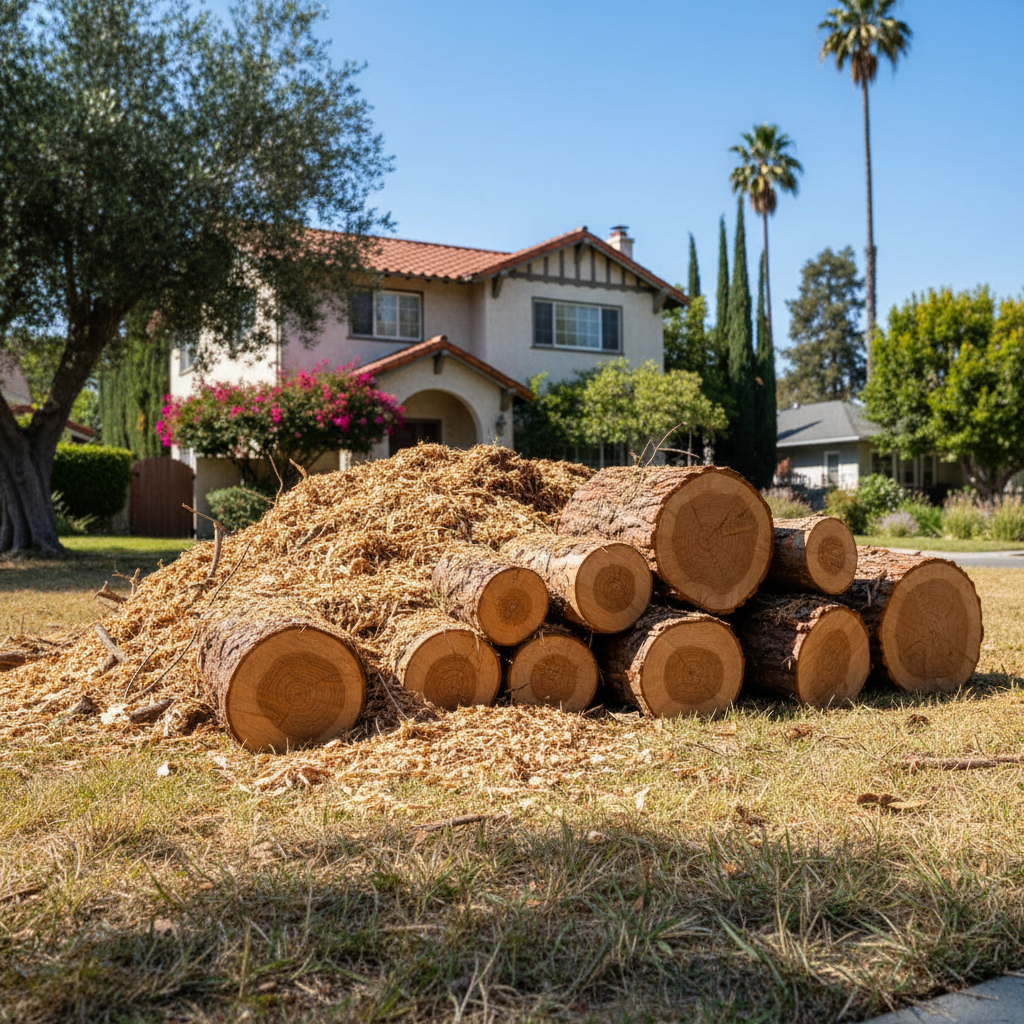
After we cut down a tree, we don't just leave a pile of wood in your yard. All the branches and smaller pieces get fed into our wood chipper. That mulch can either be hauled away by us, or if you want it for your garden beds, we can leave it for you. The larger trunk sections, often called 'logs,' are typically loaded onto our trucks and hauled off-site for disposal or recycling. Sometimes, if a homeowner wants to keep some for firewood or for a woodworking project, we can cut it into manageable lengths and stack it for you. Just let us know your preference beforehand so we can plan for it.
How long does a typical tree removal take?
This really depends on the tree. A small, easily accessible tree might only take a few hours. A massive, complex removal, especially one near power lines or structures, could take a full day or even two, particularly if it requires a crane or specialized rigging. Things like weather can also play a role; we won't work in high winds or heavy rain if it compromises safety. When we give you an estimate, we'll also give you a realistic timeframe for completion. We pride ourselves on efficiency, but we'll never rush a job if it means compromising safety or quality.
Should I worry about roots damaging my foundation or pipes after removal?
It's a common concern, especially with older homes here in Pasadena where tree roots might have been a problem. Once the tree is removed, the roots in the ground will naturally start to decay. This process can take years, depending on the size of the roots and the soil conditions. Generally, as they decay, they don't cause new damage to foundations. The real risk was when the live roots were actively growing and seeking moisture, potentially exploiting existing cracks. As for pipes, if a root has already breached a pipe, removing the tree won't fix the pipe itself, but it will stop the root from continuing to grow and clog it further. The decaying roots usually aren't a structural threat once the tree is gone. If you're really worried about subsidence from decaying roots, especially near a foundation, stump grinding can help remove the larger root crown, but the deeper roots will still remain.