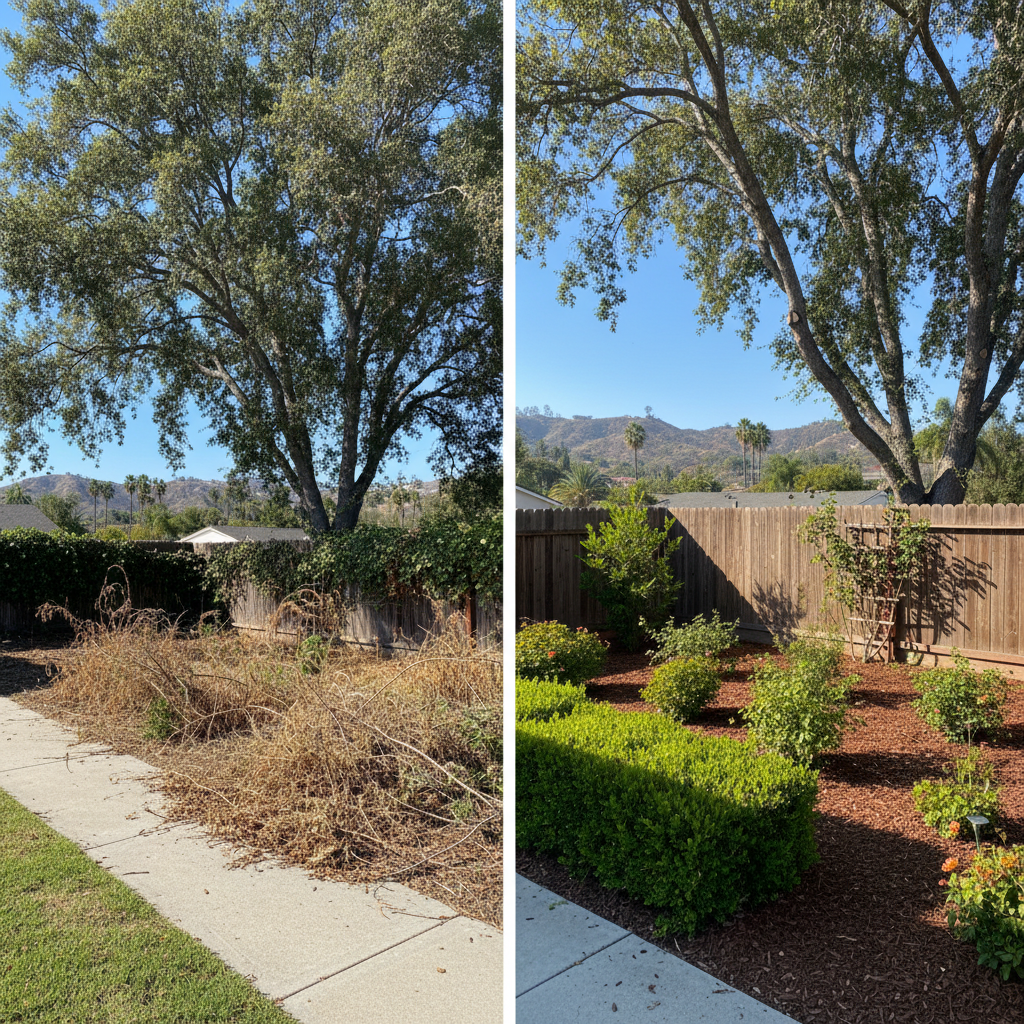
Most property owners in Pasadena look at an overgrown hedge and just want to take the electric shears to it until it looks like a clean green box. It is fast, it looks neat from the street for about ten days, and you are done with yard work by lunch. But after twenty years of working on properties from Linda Vista down to the Playhouse District, Pasadena Tree Service can tell you that default shearing method is slowly killing half the shrubs in our area.
Let us break down the two main ways you can handle Shrub and Bush Trimming around your house: traditional shearing versus selective hand pruning. They are totally different methods, and choosing the wrong one costs you money, water, and plant health.
The Case for Shearing
Shearing means taking hedge trimmers and cutting every outer leaf surface into a flat plane or a neat ball, no matter what is happening underneath. It is inexpensive. If you hire someone, it takes them fifteen minutes. If you do it yourself, you just plug in the tool and go. For formal privacy hedges like privet or certain ficus, a quick haircut keeps things tidy against the driveway.
Here is the catch. Shearing creates a dense outer shell of foliage that blocks sunlight from reaching the interior branches. Within a couple of seasons, you end up with a hollow, woody shell full of dead interior growth and twigs. Every time you shear, you trigger a massive flush of weak, thin sucker growth right at the cut sites. That means you have to keep trimming it over and over, every four to six weeks all summer long.
The Case for Selective Pruning
Selective pruning is a slower process where you use hand pruners or loppers to cut individual branches back to a side branch or a main stem. You are following the natural shape of the plant rather than forcing it into a geometric shape.
- Takes more time and a bit more skill to do right
- Lets sunlight reach the interior of the plant for better overall health
- Promotes strong, deep-rooted growth instead of a fragile outer crust
- Only needs to be done once or twice a year instead of monthly
When you prune selectively, you are working with the biology of the plant rather than fighting it. That matters in our climate.
- Pasadena heat and dry spells stress plants out
- Sheared plants burn faster in a heatwave because their interior is exposed and stressed
- Selectively pruned shrubs hold moisture better because the canopy shades the root zone naturally
Pasadena Tree Service sees so many boxwoods and xylosmas suffering from dieback simply because they have been sheared to death for a decade. The outer layer gets so thick that water from your sprinklers or drip lines cannot even penetrate the root zone properly.
Cost and Durability Comparison
Up front, selective pruning costs more if you are paying a crew because it takes actual hand labor and plant knowledge. Shearing is cheap labor. But look at the long-term math. If you shear a hedge all summer, you are paying for four or five visits a year. If you switch to proper selective pruning, you might only need two visits a year, and your plants will actually live past the five-year mark.
Durability is where selective pruning wins. A plant that is pruned correctly develops a strong framework. It survives high Santa Ana winds roaring down from the mountains much better than a sheared bush with a weak, twiggy interior structure.
If you have formal, tight property-line hedges that require a wall-like look, shearing might be your only realistic option. But for almost everything else in a Southern California landscape, including native sages, pittosporum, lavender, or ornamental shrubs, hand pruning is the clear winner for long-term health, water efficiency, and a natural look that fits our local environment. For homes and businesses in Pasadena, Pasadena Tree Service provides Shrub and Bush Trimming services.