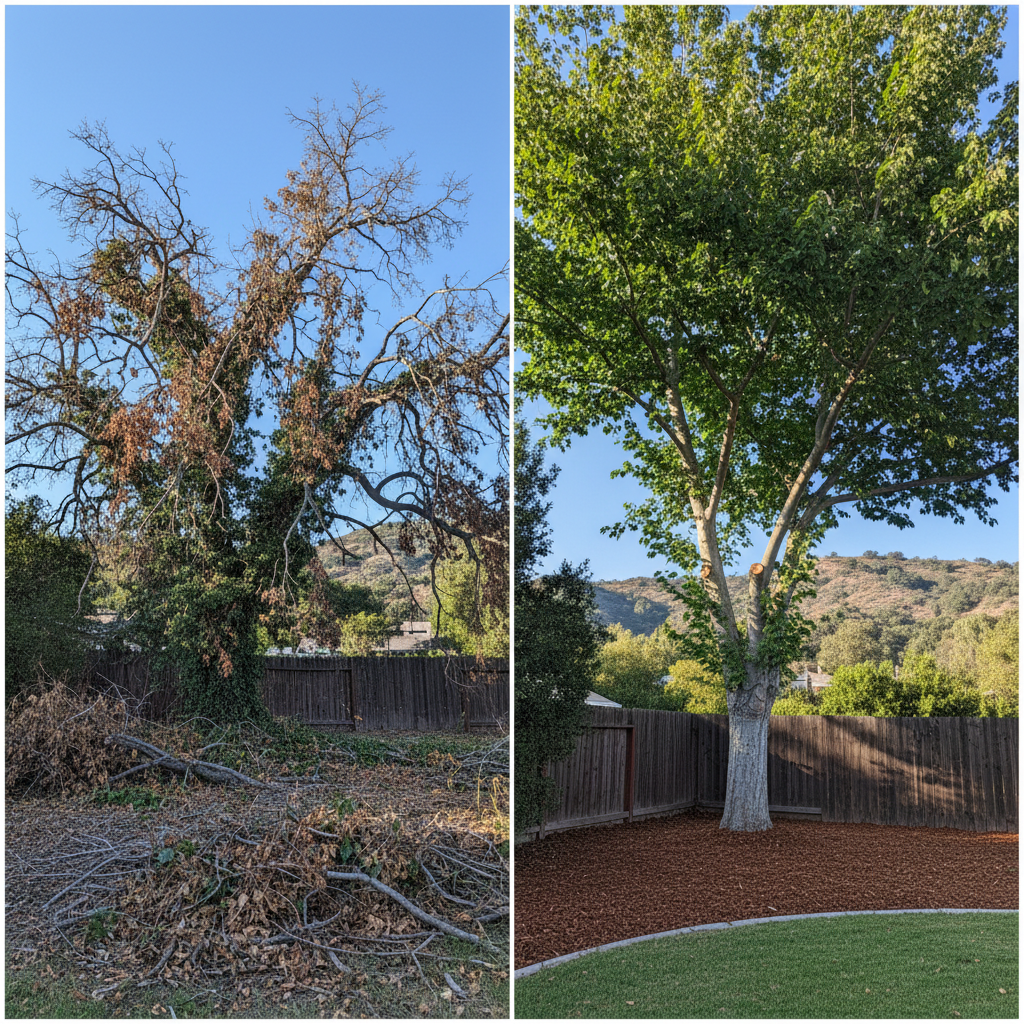
You've got a big tree, maybe an old oak or a sycamore, shading your yard here in Pasadena. It's grown a lot, maybe it's getting too close to the house or power lines, or you just want more sunlight in the yard. So, you think about trimming it. And sometimes, folks look at that tree and think, "Let's just chop the top off." That's called 'topping,' and let me tell you, it's almost never the right answer. We see it all the time, and it almost always leads to bigger problems down the road.
What is Tree Topping, Anyway?
Topping is basically cutting off the main branches and stems of a tree, often leaving just stubs. People do it because they want to reduce the tree's height quickly or control its spread. It looks like a fast solution, right? You get a lot of wood off the tree in one go, and suddenly, there's more light. But that initial relief is usually short-lived.
The Ugly Truth About Topping
When you top a tree, you're essentially giving it a massive, unnatural wound. Trees aren't designed to heal from that kind of trauma. Here's what happens:
- Weak Growth: The tree responds by sending out a bunch of fast-growing, weak shoots from those stubbed branches. These are called 'water sprouts.' They grow super fast because the tree is trying to replace its lost canopy, but they're poorly attached and much more prone to breaking in a strong Santa Ana wind.
- Disease & Pests: Those big, open wounds are like welcome mats for diseases and insects. A healthy tree can usually fight off invaders, but a topped tree is stressed and vulnerable. It's like leaving your front door wide open for trouble.
- Starvation: The leaves are how a tree makes its food. When you lop off a huge portion of the canopy, you're starving the tree. It can take years for it to recover, if it ever does fully.
- Ugly Appearance: Let's be honest, a topped tree looks terrible. It's disfigured, unnatural, and those bushy water sprouts just make it look like a bad haircut that never grows out right. It'll never regain its natural, beautiful form.
- Increased Costs: You might think topping is cheaper upfront, but because of all the weak growth, increased disease risk, and potential for branch failure, you'll end up paying more for repeated trimming, pest control, or even full removal down the line.
The Right Way: Proper Pruning
Now, let's talk about how we do things at Pasadena Tree Service, and how any good arborist should approach your trees. Proper pruning is an art and a science. It's about understanding how a tree grows and what it needs to stay healthy and strong.
With proper pruning, we focus on:
- Removing Dead or Diseased Branches: This is crucial for the tree's health and to prevent the spread of disease.
- Thinning the Canopy: We carefully remove select branches to improve air circulation and allow more light to penetrate, without compromising the tree's structure or health. This is especially important for fruit trees or dense shade trees in our often-humid Pasadena summers.
- Raising the Crown: We remove lower branches to provide clearance for pedestrians, vehicles, or structures.
- Reducing the Crown: If a tree truly needs to be smaller, we use specific cuts to reduce its size while maintaining its natural shape and health. This involves cutting back to a lateral branch that's large enough to take over the terminal role, not just hacking off the top.
- Structural Pruning: Especially for younger trees, we guide their growth to develop a strong, stable structure that will withstand our local conditions, like those gusty winds we get in the foothills near Altadena.
Cost, Durability, Maintenance, and Appearance: A Quick Comparison
When you stack them up, the choice is pretty clear, especially for a tree that you want to keep around for a long time:
- Cost: Topping might seem cheaper initially, but proper pruning is a long-term investment that saves you money by promoting tree health and reducing future problems. Topped trees often need more frequent, costly interventions.
- Durability: Properly pruned trees are stronger, more resilient, and better able to withstand storms and pests. Topped trees are structurally weak and a hazard.
- Maintenance: Proper pruning reduces the need for constant corrective action. Topped trees require ongoing, often expensive, maintenance to deal with the weak, fast-growing sprouts.
- Appearance: A properly pruned tree maintains its natural beauty and enhances your property's curb appeal. A topped tree is an eyesore and can actually decrease your property value.
Look, I get it. You want your trees to be safe and look good. But taking shortcuts with something as vital as a tree's health just doesn't pay off. If you're looking at a tree that needs attention, don't let someone convince you that topping is the way to go. You'll regret it. Invest in proper care, and your trees will thrive for years to come, adding beauty and value to your home. Give us a call, and we'll come out and give you an honest assessment of what your trees truly need.